Why the notice is the wrong starting point
Most suppliers try to enter European defence by watching tender portals. That is the least productive starting point, for two structural reasons.
First, a large and growing share of defence contracts is never advertised. Article 346 TFEU lets a Member State protect its essential security interests, and Directive 2009/81/EC permits negotiated procedures without publication in defined cases [1]. Article 19 of the SAFE Regulation now extends that possibility to every procurement involving a SAFE recipient state [3].
Second, when a notice does appear, the decisions that matter are already taken. Belgium's next 72-month framework for soldier equipment, reference MRMP-S/AT 26ST640, was published on 3 June 2026 with a deadline of 7 July 2026 [7]: four weeks to respond on a contract that closes that market for six years. Suppliers who see a programme 12 to 36 months earlier, as Dfensio's briefings present them, can decide whether to bid as a prime or position as a subcontractor, obtain the certifications and register with the right primes before the notice.
The other entry is the supply chain of a contract already awarded. The European Defence Agency's common procurement of 84 mm ammunition for the Carl-Gustaf weapon system, worth EUR 250,000,000, was awarded to Saab Dynamics AB on 11 February 2026 [9]. The competition is closed; the prime's sourcing has only just begun.
Article 21: the rule that turns a prime's supply chain into a competition
The most under-used provision in European defence procurement is Article 21 of Directive 2009/81/EC, headed 'Subcontracting'.
Article 21(4) provides that Member States may allow a contracting authority to 'ask or be required to ask the successful tenderer to subcontract to third parties a share of the contract'. That share must be expressed as a range with a minimum and a maximum, and the operative sentence reads: 'The maximum percentage may not exceed 30 % of the value of the contract.' The winner must then award those subcontracts 'in accordance with the provisions of Title III' [1].
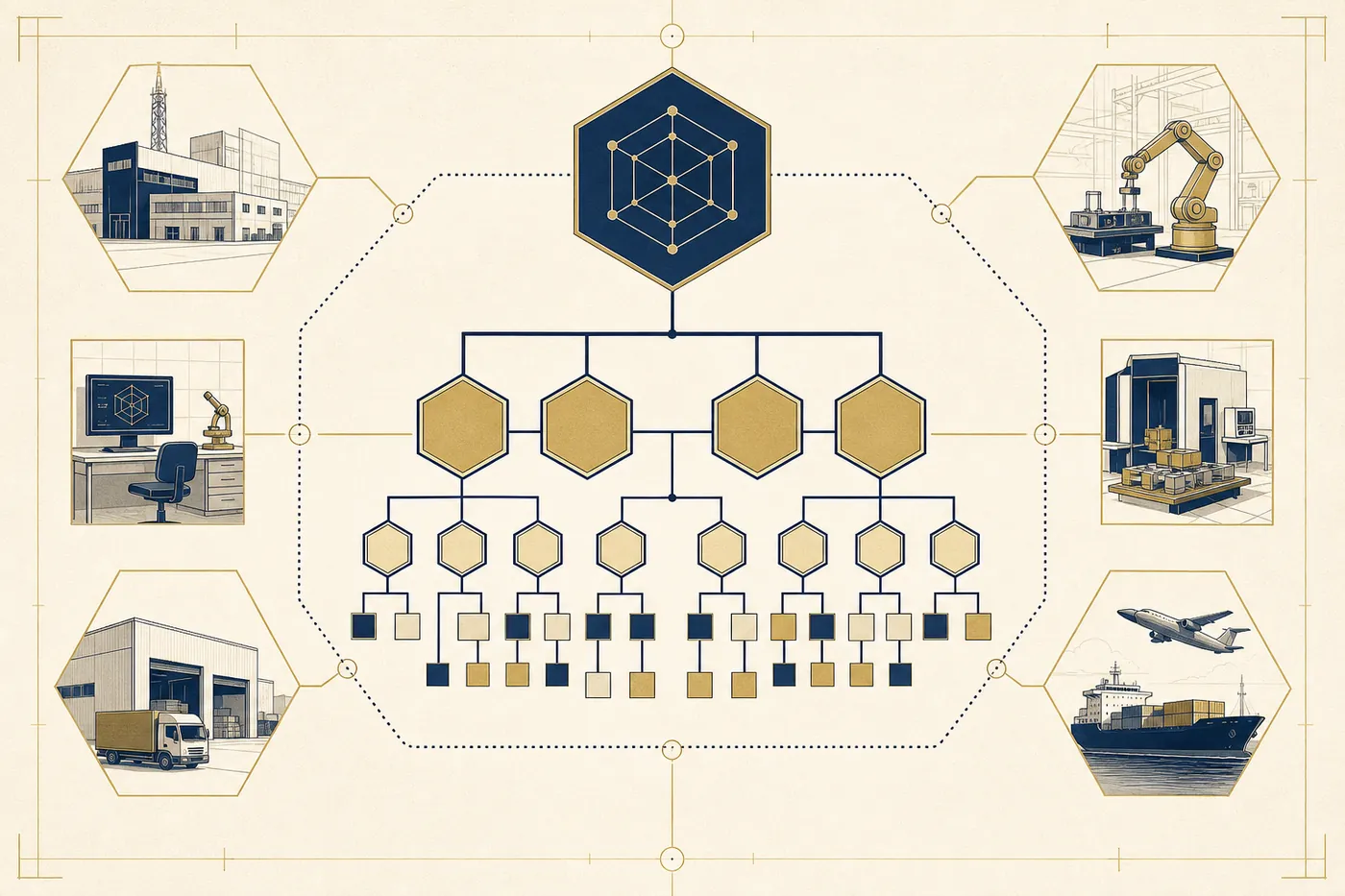
Article 21(3) is the companion: the authority may oblige the winner to apply Title III to all or certain subcontracts it intends to award. Title III, Articles 50 to 54, covering scope, principles, thresholds and advertising, qualitative selection of subcontractors and the rules to be applied, converts the prime's own procurement into a regulated, advertised competition [1].
Two consequences follow. Where the clause is used, subcontracts are published and open, and a firm that has never held a defence contract can bid. And Article 21(5) limits the prime in the other direction: a subcontractor may be rejected only on criteria applied to select tenderers for the main contract, and the rejection must be justified in writing.
The thresholds, exemptions and EU incentives that shape access
Five legal parameters determine what you see, whether you are eligible, and what you are paid to do.
Thresholds. From 1 January 2026, Directive 2009/81/EC applies at or above EUR 432,000 for supplies and services and EUR 5,404,000 for works, under Commission Delegated Regulation (EU) 2025/2487 of 2 December 2025. Both fell from EUR 443,000 and EUR 5,538,000, because the thresholds track the special drawing right under the WTO Government Procurement Agreement [2].
Article 346 TFEU. A Member State may exclude a procurement to protect essential security interests. The contract still exists and the programme is still budgeted; only the advertisement disappears.
SAFE procedure. Article 19 of Council Regulation (EU) 2025/1106 states that 'procurements involving at least one Member State receiving financial assistance under the SAFE instrument shall be deemed to satisfy the condition of urgency resulting from a crisis for the purposes of Article 28(1), point (c), of Directive 2009/81/EC', which is the negotiated procedure without publication, applied by operation of law. Article 6 sets the ceiling at EUR 150,000,000,000 in loans [3]. As SAFE-financed procurement grows, the share of European defence spending visible in notices will fall.
SAFE eligibility. The same regulation sets gates that apply down the chain. Article 16 limits components originating outside the Union, the EEA EFTA states and Ukraine to 35 per cent of the estimated component cost of the end product, and requires contractors and subcontractors alike to be established in that territory and free of control by a non-eligible third country [3]. A subcontractor that fails either test disqualifies the offer, not merely itself.
EDIP. Regulation (EU) 2025/2643 raises the Union contribution to up to 50 % of eligible costs 'where the majority of beneficiaries are SMEs or mid-caps', against a base rate of 35 %, and rewards actions where 'more than 20 % of the total value of the end product is made by suppliers established in at least one Member State other than the Member State in which the prime contractor is established' [4]. A prime assembling a consortium therefore has a measurable reason to include cross-border SMEs.
Registration: five platforms and two agencies cover most of the market
The practical work of becoming a supplier reduces to a manageable list: onboarding across the major European primes is concentrated on a handful of platforms.
| Organisation | Registration route | What it opens |
|---|---|---|
| Leonardo | Supplier pages and self-registration on SAP Ariba (realm finmeccanica) [13] | Entry to the supplier register, then qualification by division |
| KNDS | Supplier portal registration (gate2procure) | Supplier relationship management for KNDS Deutschland and KNDS France |
| Rheinmetall | Rheinmetall Procurement Suite on Ivalua | Acceptance of terms of use, then the registration form |
| PGZ | Contractor registration on the group purchasing platform [10] | Access to announced proceedings and the ability to submit bids |
| Kongsberg | Supplier pages, with published quality requirements [6] | Named certifications: ISO 9001, AS9100, AQAP-2110/2310, AQAP-2210, AS9115 |
| NSPA (NATO) | ePortal registration and NCAGE codification [5] | Eligibility to receive NSPA requests for proposals |
No European prime publishes a minimum turnover requirement. The published barriers are certifications and, in the United Kingdom, shared sector accreditation through JOSCAR, completed once and consulted by multiple buyers [8]. The NSPA route is the most under-used of the seven: registration on the ePortal, with an NCAGE code, is the precondition for any NATO Support and Procurement Agency award [5]. In France, a company account on the state purchasing platform PLACE is required before any submission [11], and primes such as Naval Group run their own supplier pages [12].
Seeing programmes early: what a Dfensio briefing provides
Registration and certification are necessary and not sufficient. The supplier that wins the subcontract is usually the one that approached the prime while the programme was still being shaped, not the one that answered the notice. Dfensio exists to give suppliers that timing.
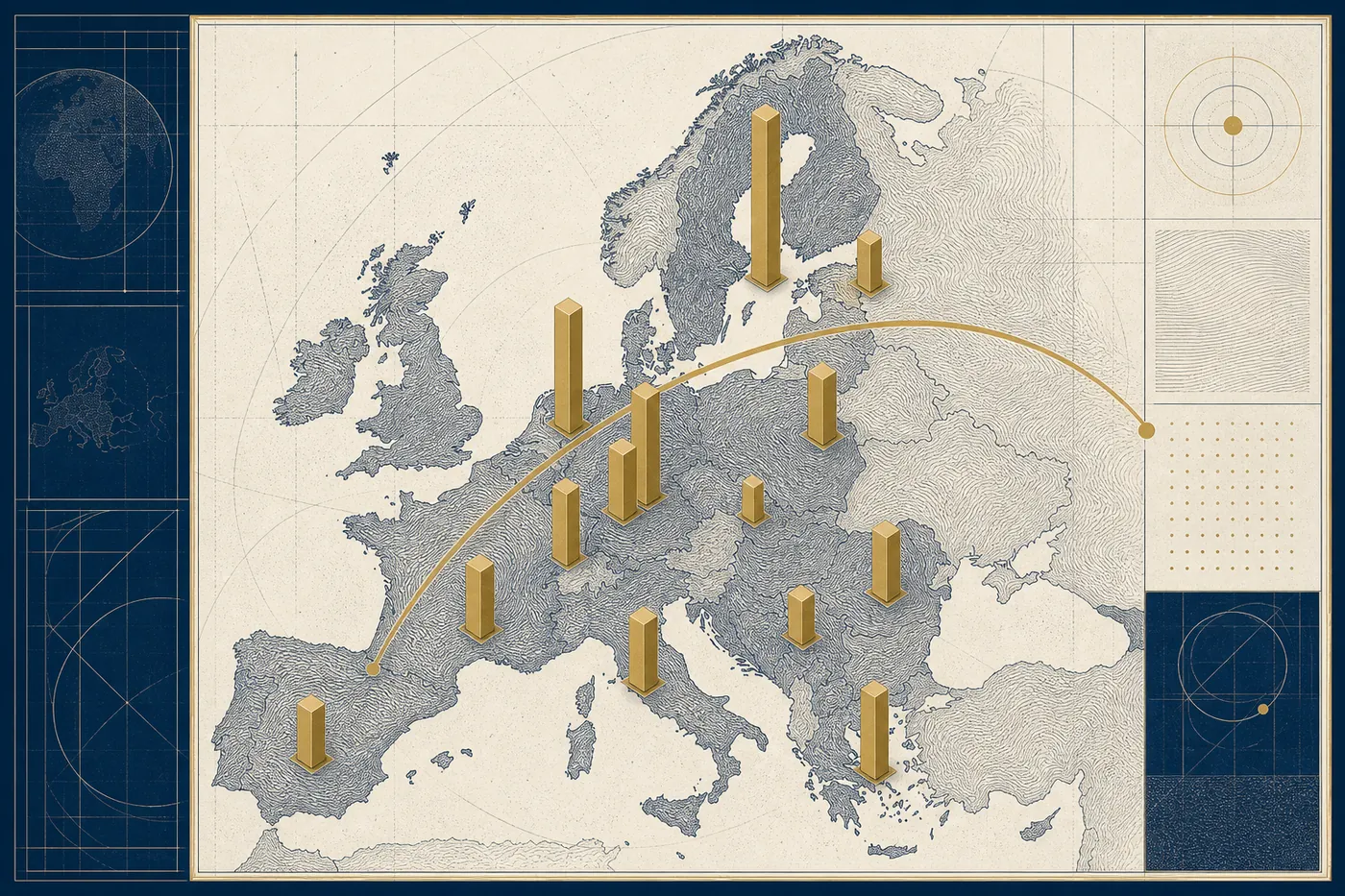
- The programmes. Fourteen European jurisdictions followed at programme level, with programmes typically presented 12 to 36 months before the first contract.
- What each record states. The contracting authority, the value where one has been published, the first commitment year and the contracting scope the state itself has declared, with the official source and its date.
- What matters for subcontracting. Whether a contract carries the Article 21 requirement, and therefore whether the prime's own procurement will be advertised; the expiry dates of existing frameworks, the only moment a closed market reopens; and the qualification requirements each prime and agency actually publishes.
All of it rests on official, published sources, and briefings with Dfensio's analysts are confidential.
A practical checklist, and next steps
- Map your capability against the programmes of two or three states and note the first commitment year of each. A Dfensio briefing provides that list for your domain.
- Register on the platforms covering the primes in your domain: roughly five accounts plus a few proprietary forms.
- Obtain the certifications those primes publish, and an NCAGE code with NSPA ePortal registration for the NATO route [5][6].
- Check your SAFE eligibility now: component origin against the 35 per cent ceiling and ownership against the control test, because these are gates rather than evaluation criteria [3].
- Identify the frameworks expiring within twenty-four months. Those are the competitions you can realistically win.
- When a prime wins a large contract, approach it within sixty days: that is when the first tier-one subcontracts are placed.
Frequently asked questions
Can a European contracting authority force a prime to subcontract 30% of a defence contract?
It can require a share, expressed as a range. Article 21(4) of Directive 2009/81/EC states that the maximum percentage of that range 'may not exceed 30 % of the value of the contract', and that the range must be proportionate to the object and value of the contract and to the industrial base concerned. Where the requirement applies, Title III of the directive, Articles 50 to 54, governs how the prime advertises and awards those subcontracts.
What are the current defence procurement thresholds in the EU?
From 1 January 2026, EUR 432,000 for supply and service contracts and EUR 5,404,000 for works, under Commission Delegated Regulation (EU) 2025/2487 of 2 December 2025. Both values fell from the 2024-2025 figures of EUR 443,000 and EUR 5,538,000, because the thresholds are recalculated every two years against the special drawing right under the WTO Government Procurement Agreement.
Do I need a minimum turnover to register as a supplier to a European defence prime?
None of the major European primes publishes a minimum turnover requirement on its supplier pages. What is published is certification: quality management systems, aerospace standards and, for NATO-related deliveries, allied quality assurance publications. Kongsberg's supplier quality page, for example, names ISO 9001, AS9100, AQAP-2110/2310, AQAP-2210 and AS9115. In the United Kingdom, sector accreditation through JOSCAR is a shared alternative to repeating the same qualification for every buyer.
When should a subcontractor approach a prime?
At two moments. Before any notice, while the programme is still being shaped, which requires seeing it 12 to 36 months ahead; and within sixty days of the prime's award, when the first tier-one subcontracts are placed. Where the contract carries the Article 21 requirement, the prime's subcontracts are advertised and can be bid for directly.
Will SAFE make European defence procurement less visible?
In tender notices, yes. Article 19 of Council Regulation (EU) 2025/1106 deems procurements involving a Member State receiving SAFE assistance to satisfy the urgency condition of Article 28(1)(c) of Directive 2009/81/EC, which permits a negotiated procedure without publication of a contract notice. The programmes themselves still exist and are still funded, which is why supplier access increasingly depends on seeing programmes early and on prior registration rather than on tender watching.
Official sources
- Directive 2009/81/EC, Article 21 (Subcontracting) and Title III, Articles 50 to 54. EUR-Lex, Publications Office of the EU, 2009-07-13
- Commission Delegated Regulation (EU) 2025/2487 of 2 December 2025 amending Directive 2009/81/EC in respect of the thresholds for supply, service and works contracts. EUR-Lex, Publications Office of the EU, 2025-12-04
- Council Regulation (EU) 2025/1106 of 27 May 2025 establishing the Security Action for Europe (SAFE), Articles 6, 16 and 19. EUR-Lex, Publications Office of the EU, 2025-05-28
- Regulation (EU) 2025/2643 of 16 December 2025 establishing the European Defence Industry Programme (EDIP), Article 20. EUR-Lex, Publications Office of the EU, 2025-12-29
- NSPA ePortal: eProcurement and codification services. NATO Support and Procurement Agency (NSPA)
- Kongsberg supplier quality requirements. Kongsberg Gruppen ASA
- Belgium, accord-cadre pluriannuel (72 mois) pour la fourniture en trois lots d'articles de l'équipement du militaire (MRMP-S/AT 26ST640), contract notice 378410-2026. Tenders Electronic Daily (TED), Publications Office of the EU, 2026-06-03
- JOSCAR, shared supplier accreditation for the defence, aerospace and security industry. Hellios Information Ltd
- Supply of 84 mm ammunition for the man-portable multi-role Carl-Gustaf weapon system, contract award notice 98208-2026. Tenders Electronic Daily (TED), European Defence Agency, 2026-02-11
- PGZ contractor registration on the group purchasing platform. Polska Grupa Zbrojeniowa (PGZ)
- PLACE, Plateforme des achats de l'État, espace entreprise. Direction des achats de l'État (France)
- Naval Group suppliers. Naval Group
- Leonardo suppliers. Leonardo S.p.A.
Dfensio's analysts are available to answer questions on any programme mentioned in this article. Request a confidential briefing at dfensio.com/contact.